Andalusia, Spain
Keeping in the theme of stunning beauty and taking way too many pictures, we visited a few towns around Andalusia, which is a southern region of Spain. We enjoyed our time in Barcelona so much a few years earlier, we decided to see more Spain and it did not disappoint!
After taking a quick train ride from the Malaga Airport, we started our explorations in Cordoba. Originally the capital city of Andalusia, Cordoba’s recorded history dates back over 5000 years! It boasts several Roman era ruins including the remains of the town Forum, a museum with an underground, partially excavated Roman theatre exhibit (sadly, our jet lagged photographer was too tired to remember to take any pictures of this), and an impressive stone bridge over the river which is now a pedestrian walkway. But Cordoba’s shining glory is the Mezquita Mosque Cathedral. Built by Muslims in 785CE, it was then consecrated as a Cathedral by the Christians in 1236. Most Muslim buildings in the area were destroyed during this time, however, even the Christians couldn’t tear down such a beautiful place and ended up expanding it by building the current Cathedral section inside the mosque during the 16th century. Like all tourists, we couldn’t help but take an over abundance of photos.
We always love historical sites, gardens, and piazzas, however, one of the most memorable experiences we had in Cordoba was a visit to the Hammam Al Andalusia, an Arab bathhouse, where we spent a few hours bathing in hot, warm, and cold baths, sauna, and getting full body scrubs/massages. We don’t typically seek out this type of luxury experience when traveling, but considering this was less per person than a one-hour massage at home, we went for it and have zero regrets.
While Cordoba has a rich history and is charming and pretty, we did find the food scene somewhat lacking. We were on the hunt for authentic local cuisine, but each time we had it, for us, it just didn’t quite live up to our expectations. Except that is for the Jamon Shop we stopped into for an aperitif one evening. This style of meat is aged at very specific temperatures and humidity levels for 2-4 years and it was absolutely some of the best cuts we’ve ever tried. The shop owner was also wonderful to chat with and he had the best Pedro Ximenez wine we tried while in town as well.


After seeing Cordoba, we hopped another train to Granada and enjoyed the smooth ride through the countryside. Although, the vast majority of the views were of olive trees, which don’t get me wrong, we adore a good olive oil, but it concerns us when we see this extent of monoculture anywhere due to the potential negative impact on the local ecosystem.
Granada —Spanish for pomegranate, a symbol you’ll spot throughout the city on everything from signs to the beautiful cobblestoned streets— is an amazing city and one we would absolutely visit again. There’s a wonderful mix of influences here, with distinct neighborhoods, a rich Muslim history, and long-standing culture of the Gypsy community giving Granada a special and unique character. We also found the food scene more varied than in Córdoba, which is always a big win in our book. Just be prepared to earn your tapas, because Granada is hilly—and there are stairs everywhere! And yes, it's true, tapas is a big thing here and it's wonderful.
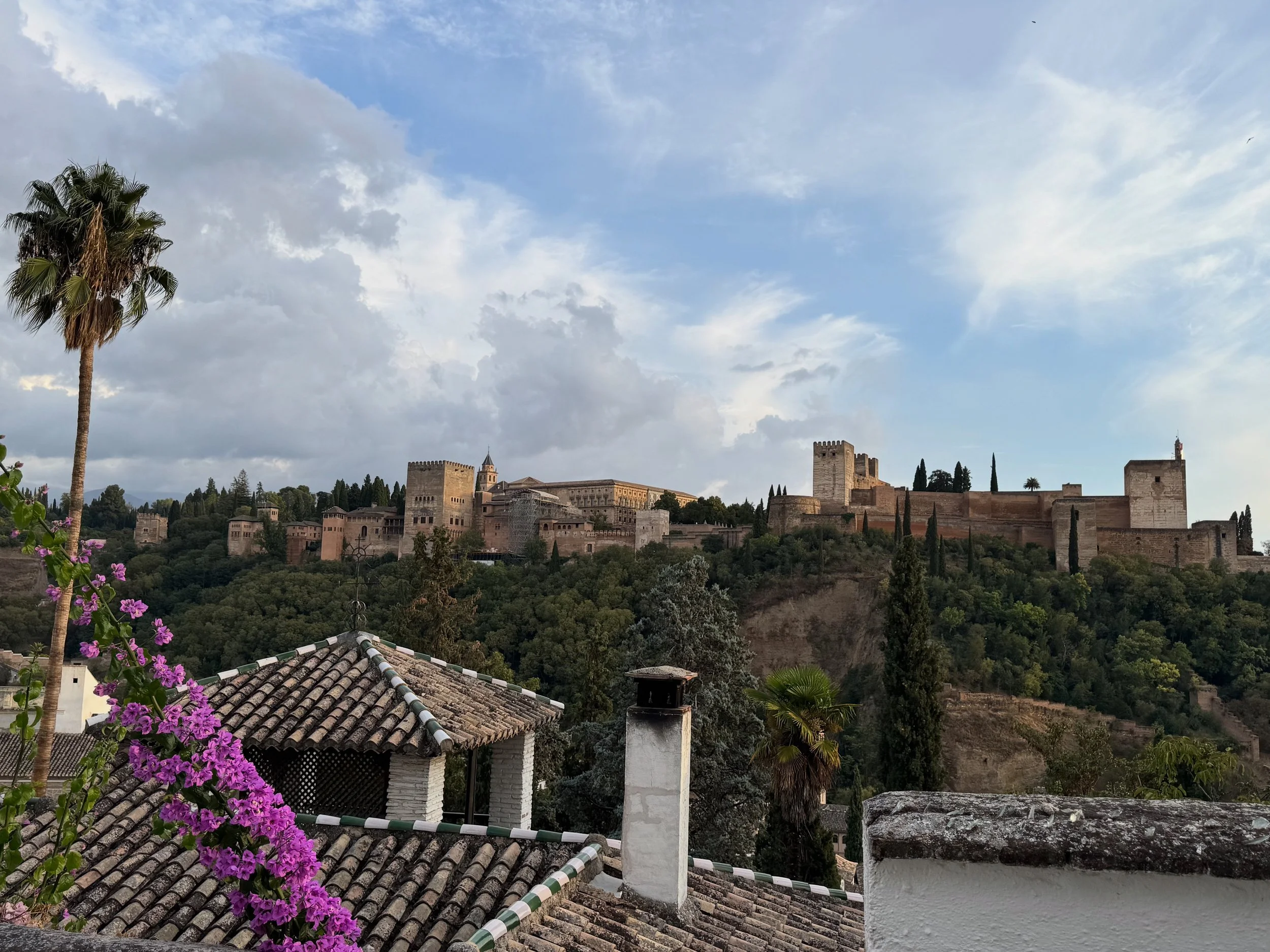
The highlight of our visit, without question, was an e-bike tour that took a group of about six of us way up into the Sierra Nevada mountains. We climbed higher and higher until we were surrounded by incredible mountain scenery, then spent the rest of the ride cruising on our bikes for roughly 54 kilometers through the national park and all the way back toward the city. It was equal parts exhilarating and ridiculously fun, and easily one of those travel experiences we still talk about. Of course, no trip to Granada would be complete without visiting the Alhambra, the spectacular hilltop fortress and palace complex built by Moorish rulers between the 13th and 14th centuries. We attended a Flamenco show with talented and passionate dancers, and also took a few walking tours, which have become one of our favorite ways to get to know a city. There’s something about exploring on foot with someone who can point out the history, quirks, hidden corners, and stories you’d otherwise walk right past that makes a place come alive.


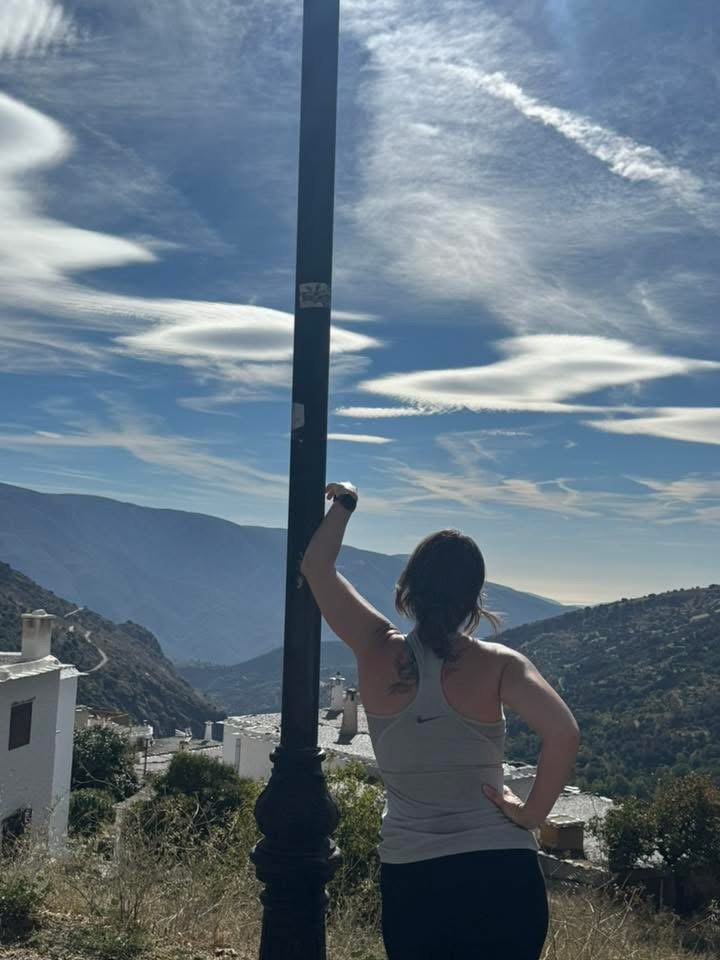
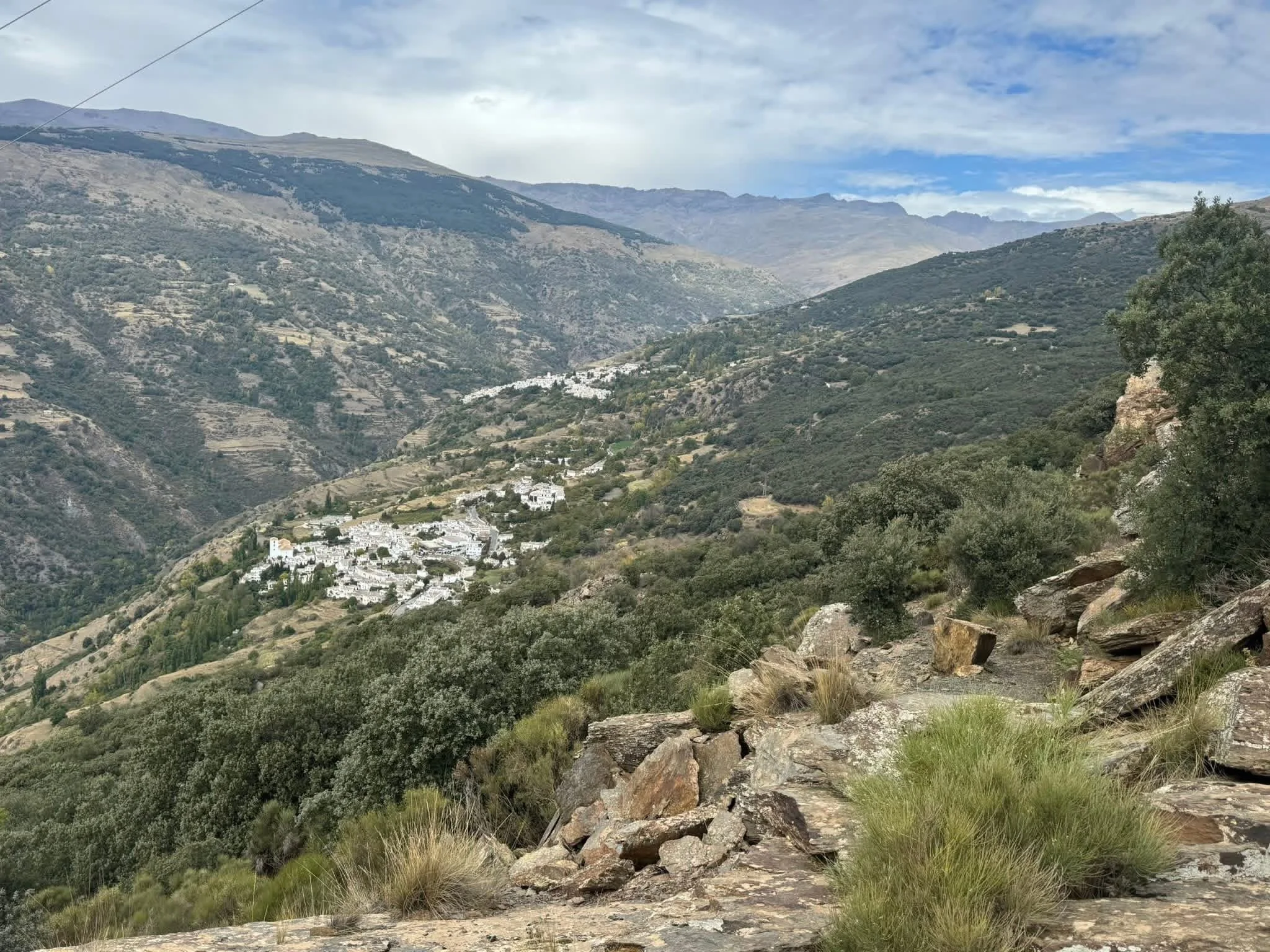
We rented a car in Granada and headed south out of town to Bubión. Bubión is one of a string of three mountaintop villages tucked into the Alpujarra region on the southern slopes of the Sierra Nevada. The villages are known for their whitewashed houses, narrow cobblestoned alleyways, distinctive flat rooftops and chimneys, and, apparently, their chestnuts. The villages were adorable and the people we met were remarkably friendly. But what really stole the show for us were the views. Looking out over the Poqueira Ravine from these little mountain villages was absolutely incredible, especially at sunset with a good Spanish vino rosso in hand. It was one of those moments where you could sit there forever and just soak it all in.
We hiked up, down, and around the ravine, making our way through the three villages, meeting some lovely kitty friends along the way. Each village was tiny, quiet, and incredibly charming, and the whole experience felt almost completely removed from the rest of the world. There was no hustle, no traffic, and very few people —just mountain air, stone paths, whitewashed houses, and enormous views. Coming from the States, it’s hard to imagine what everyday life would be like in a place this remote and peaceful. But I have to admit, if someone offered me a little house in the mountains, a walking path into town, and a view like this everyday… I wouldn’t scoff at the idea.






Malaga is a bustling Mediterranean seaside city with a great food scene, a lively atmosphere, and plenty of opportunities to meet people and make new friends. We really enjoyed our short time here. If you’re flying in or out of Malaga Airport, I’d highly recommend giving yourself a few days in the city rather than treating it just as a place to catch a flight. There’s a lot to see, and the combination of old-world history, beach culture, and modern city life gives Malaga a really good vibe.
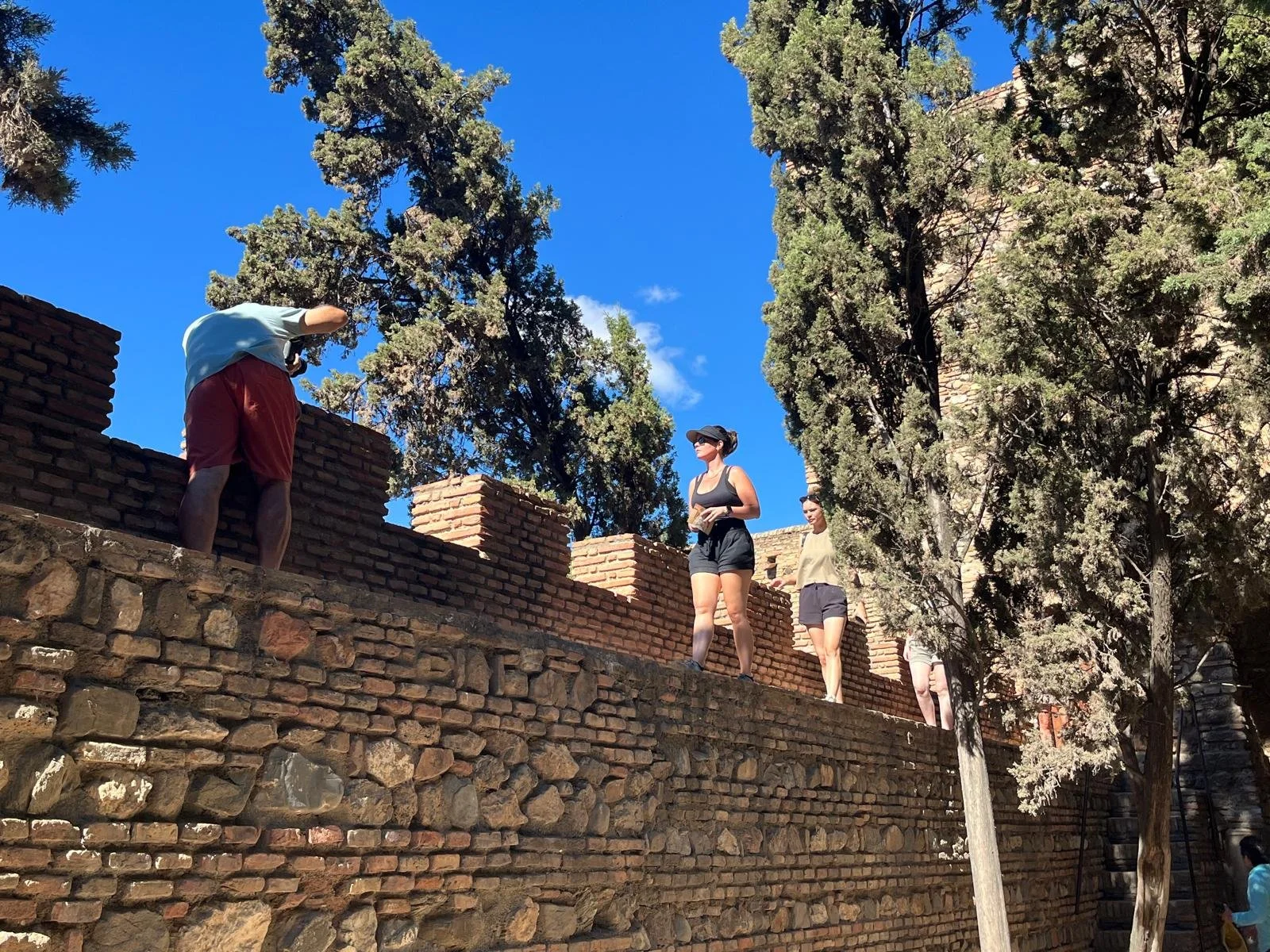
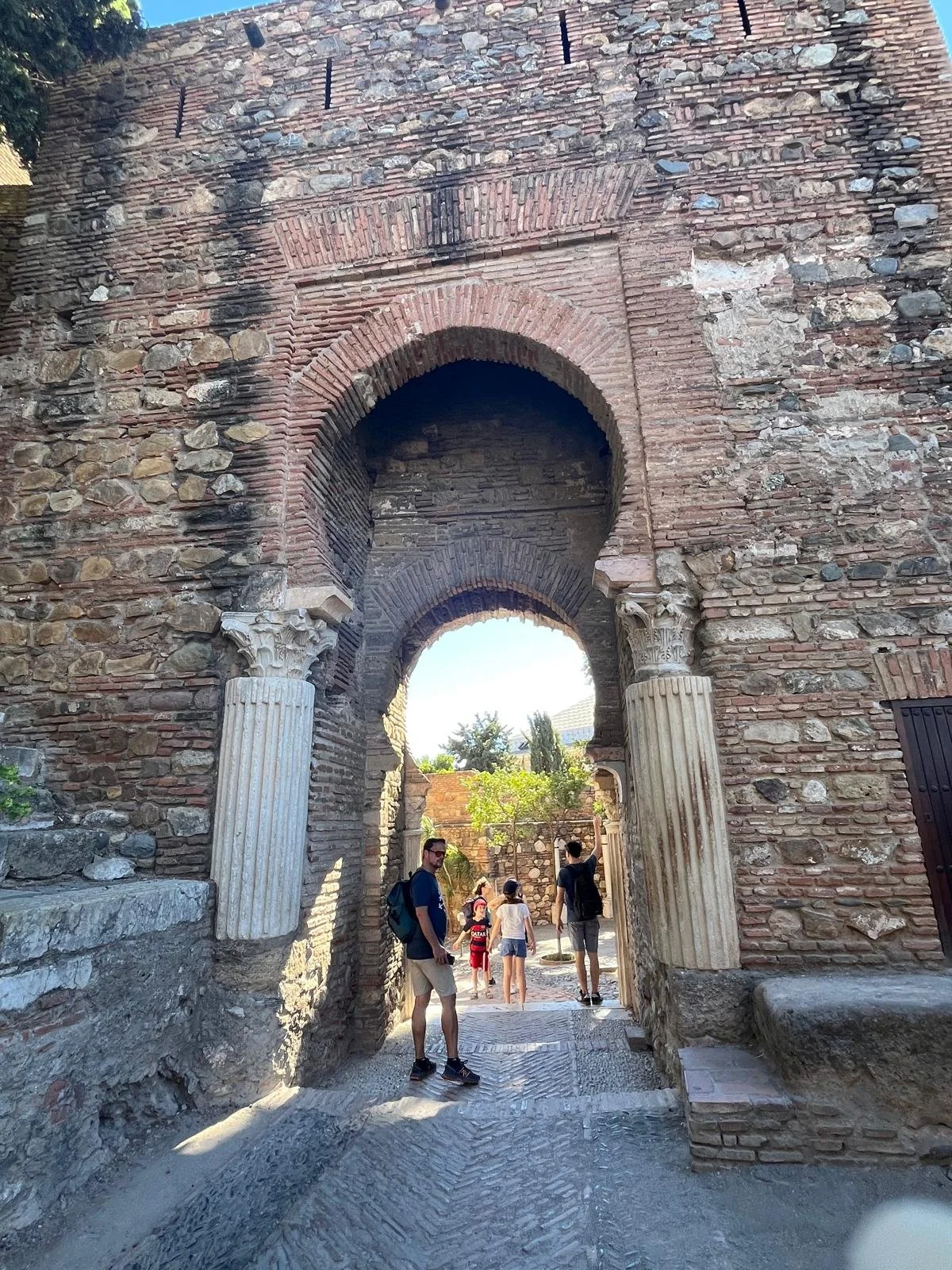
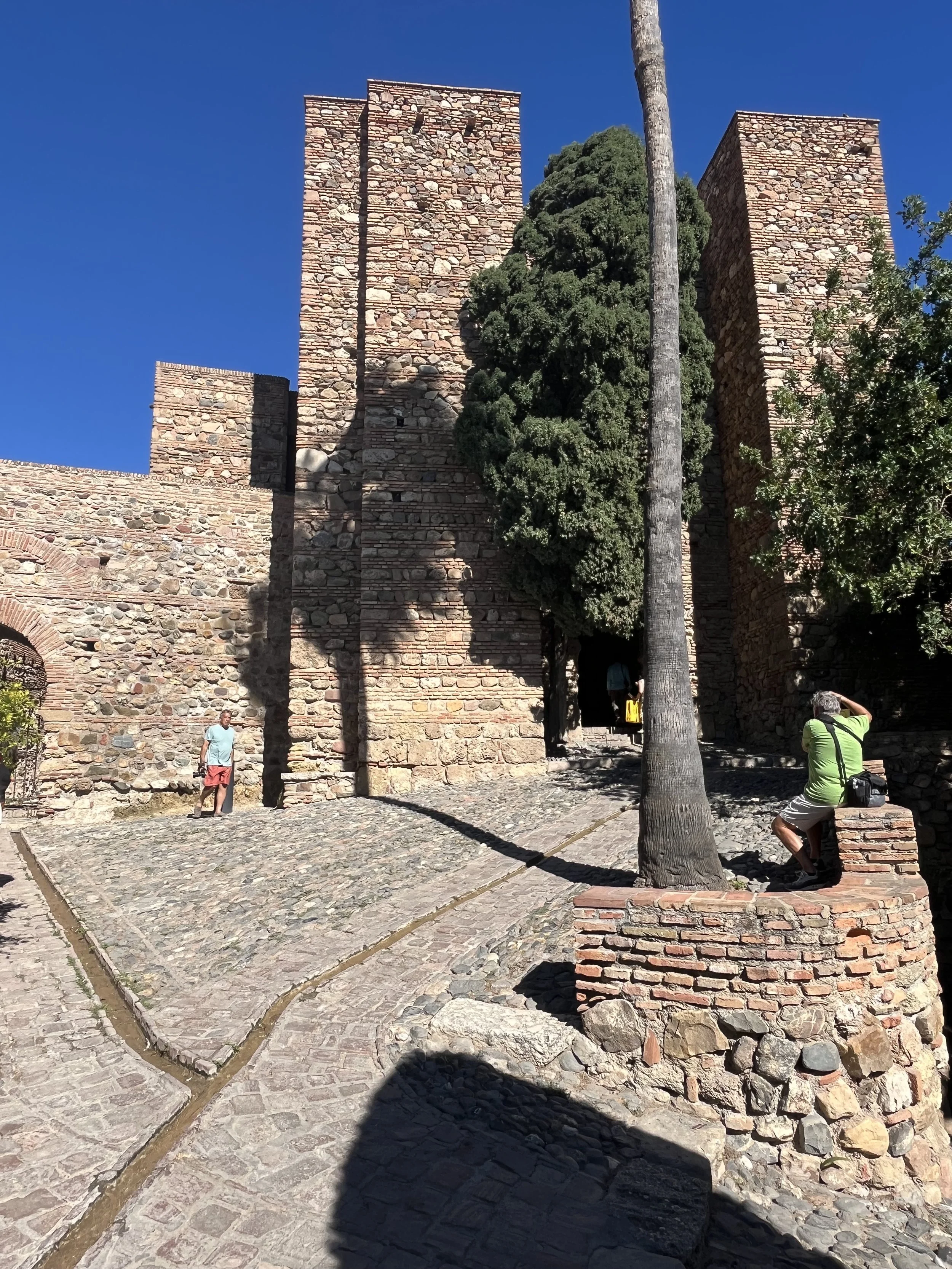
Of course, there are a few obligatory stops. The Alcazaba, an 11th-century Moorish fortress with beautiful courtyard gardens and views over the port, is a must. Then there’s the Castillo de Gibralfaro, a 14th-century mountaintop castle where you can look out over practically the entire city and coastline. We also visited the Roman Theatre, dating back to the 1st century BC, which is a pretty incredible reminder of just how many layers of history are packed into this place. Of course, we also made time for chilling on Malaga Beach. This was technically our first time swimming in the Mediterranean, and it definitely won't be our last. Malaga is busy, no question, but it's one of those places were you'll be happier if you can just embrace and connect with the energy of the city.